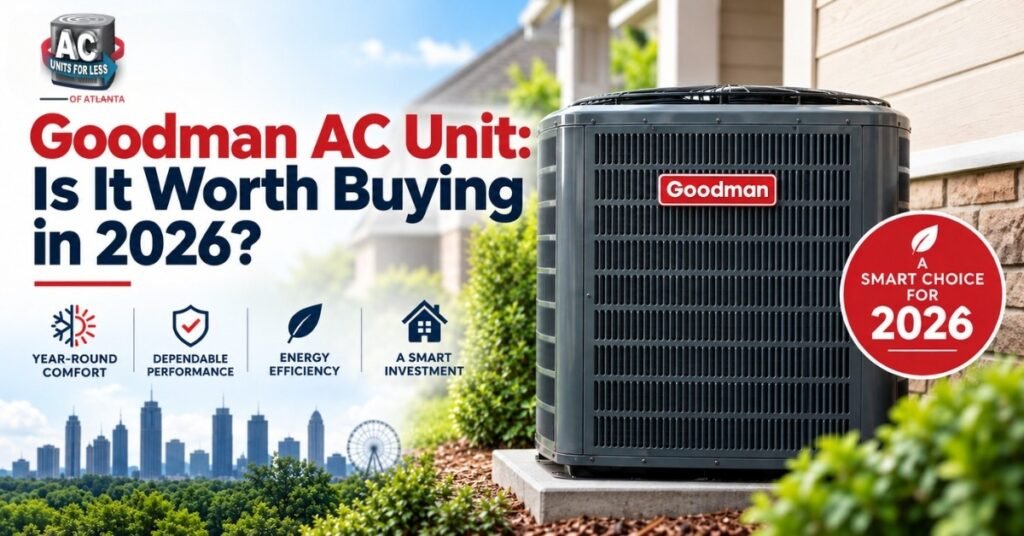
If you’re shopping for cooling equipment this year, chances are Goodman has come up more than once. It’s one of the most searched HVAC brands in the country, and for good reason. A Goodman AC unit sits in that sweet spot between price and performance that a lot of contractors and homeowners are looking for. But “popular” doesn’t always mean “right for your project,” so let’s break down what you’re actually getting when you buy one.
This isn’t a sales pitch. It’s a straight look at build quality, sizing, efficiency, reliability, and where a Goodman AC unit fits into a larger HVAC plan, especially if you’re buying for a home, a rental, or a commercial property here in Georgia.
What Makes a Goodman AC Unit Different
Goodman has built its reputation on manufacturing equipment domestically and keeping parts standardized across model lines. That matters more than people realize. When a technician can source a part quickly instead of waiting weeks for a specialty component, downtime drops and long-term costs stay predictable.
A Goodman AC unit typically uses a single-stage or two-stage compressor, R-32 refrigerant on current models, and a galvanized steel cabinet built to handle outdoor exposure. None of this is flashy. It’s practical engineering built to hold up cleanly over a decade or more of Georgia summers. If you want to see the full lineup of what’s currently in stock, our products page breaks down every tonnage and SEER2 rating we carry.
How Goodman Builds Its Condenser Units
The outdoor half of any split system, the goodman ac condenser unit, is where most of the engineering investment goes. Goodman’s condenser units use a rotary compressor on entry-level models and a two-stage scroll compressor on the higher-efficiency lines. Both designs pair with an enhanced aluminum fin coil that improves heat transfer without adding much weight to the cabinet.
What stands out about a goodman ac condenser unit is how consistent the platform is across tonnage sizes. Whether you’re sizing a small unit for a one-bedroom rental or a larger system for a multi-family property, the internal components follow the same basic architecture. That consistency is part of why Goodman shows up so often in wholesale and contractor circles. It’s not the most complicated equipment on the market, and that’s the point.
Pair that condenser with a matched air handler or coil, and you have a complete goodman hvac system built around parts that were engineered to work together rather than pieced together from mismatched brands.
Picking the Right Size: 2 Ton, 3 Ton, and 5 Ton Options
Sizing is where most buying mistakes happen, and it’s worth slowing down here. An oversized unit cycles on and off too quickly, which shortens equipment life and leaves rooms feeling clammy. An undersized one runs constantly and still can’t keep up on the hottest days.
Here’s a rough guide to help you understand where the common sizes land:
- A goodman 2 ton ac unit typically covers homes or units in the 900 to 1,200 square foot range, making it a common choice for smaller residences, condos, and rental units.
- A goodman 3 ton ac unit is the most requested size we sell, generally suited for homes between 1,500 and 1,800 square feet depending on insulation and ceiling height.
- A goodman 5 ton ac unit is built for larger homes or light commercial spaces, usually in the 2,400 to 3,000 square foot range, and shows up often in our commercial and multi-family orders.
None of these numbers are exact science. Insulation quality, window count, ceiling height, and local climate all shift the math. If you’re unsure which tonnage fits your project, our team can walk through the load calculations with you, and it’s worth that conversation before you commit to equipment.
For a broader look at how different system types compare beyond just tonnage, our guide on different types of air conditioning systems covers ductless, package units, and split systems side by side.
Efficiency and SEER2 Ratings Explained
Efficiency is where a lot of buyers get lost in the numbers, so it’s worth simplifying. SEER2 measures how much cooling a system produces relative to the energy it uses over a season. The higher the number, the less a unit has to work to keep a space comfortable, which matters most during the stretch of Georgia summer when the outdoor unit barely gets a break.
Entry-level Goodman lines sit in the 13.4 to 14.5 SEER2 range, which meets current federal minimums and covers most standard residential needs. Higher-tier lines push past 15 SEER2 and typically pair a variable-speed or two-stage compressor with a matched coil for better performance on the mild days that make up a big chunk of the year.
A couple of things worth remembering: higher-rated systems generally run quieter and manage humidity better because they cycle at lower stages more often, and the rated SEER2 number only holds up when the condenser is paired with a matching indoor coil. In a hot, humid market like Atlanta, a higher SEER2 system earns back more of its value than it would in a milder climate with a shorter cooling season.
Is Goodman a Good AC Unit for Georgia Homes?
This is the question most people are really asking, so let’s answer it directly. Is goodman a good ac unit for the kind of heat and humidity Georgia deals with every summer? Generally, yes, with a few caveats worth knowing before you buy.
Goodman equipment performs well in hot, humid climates because the coil designs and refrigerant charge are built for sustained high-load cooling rather than short bursts. Where Goodman sometimes gets mixed reviews is on the acoustic side. Entry-level models run a bit louder than some premium competitors, which matters if the condenser sits close to a bedroom window or a shared property line.
On reliability, the answer holds up. Whether the equipment is a good fit really comes down to correct sizing and proper setup more than the hardware itself. A correctly sized unit that’s set up the right way tends to run for well over a decade with normal upkeep. Most of the failures we hear about trace back to sizing mistakes or shortcuts taken along the way, not the equipment.
For more detail on how Goodman equipment compares to other manufacturers we carry, including Daikin and Mr. Cool, this resource onquality heating and cooling equipment options is worth a read.
What to Check on the Spec Sheet Before You Buy
A spec sheet tells you more than a product photo ever will, so it’s worth knowing what to look for before you commit to a unit.
- Refrigerant type and charge amount, since current R-32 models fall in line with where the industry is headed rather than a phased-out standard.
- Rated SEER2 and HSPF2 numbers, which only hold true when the condenser is paired with a matching coil or air handler from the same line.
- Sound rating in decibels, which matters more than people expect if the unit will sit near a bedroom window or a shared property line.
- Electrical requirements and nameplate amperage, which should always be checked against the rest of the system before ordering, especially when the old equipment ran on different specs.
- Warranty terms and registration window, since coverage often depends on registering the unit within a set number of days of the purchase date.
Knowing these details ahead of time avoids most of the surprises that show up later in the process.
Common Concerns Contractors and Homeowners Raise
A few questions come up often enough that they deserve a direct answer.
- Parts availability tends to be strong since Goodman standardizes components across model years, which keeps turnaround shorter than some import brands.
- Warranty coverage is solid on paper, but it depends on registering the unit within the required window. Skipping registration is a common reason claims get denied.
- Noise levels sit in the average range for the category, so ask about higher-tier condenser options if quiet operation is a priority.
- Refrigerant type matters for the long run too. Current R-32 models are built around evolving EPA regulations, so equipment purchased today is aligned with where the industry is headed rather than a phased-out standard.
Staying on top of basic upkeep also plays a bigger role in lifespan than most people expect. Our HVAC maintenance checklist walks through the seasonal tasks that keep any system, Goodman or otherwise, running efficiently through Atlanta’s summers.
Habits That Extend the Life of the System
A little routine upkeep goes a long way toward hitting that 12 to 15 year mark.
- Swap or clean air filters on a consistent schedule, since a clogged filter forces the compressor to work harder than it needs to.
- Keep the outdoor coil clear of leaves, grass clippings, and debris, especially after storms or lawn work nearby.
- Have a licensed technician check the system at least once a year, ideally before the cooling season ramps up, to catch small issues early.
- Watch for unusual noises or a drop in cooling performance, both of which are cheaper to address early than after a full breakdown.
None of these tasks require special tools, which is part of why a well-maintained goodman hvac system tends to outperform its rated lifespan.
How a Goodman AC Unit Fits Into a Full HVAC System
Buying a condenser on its own only solves part of the equation. The equipment performs best when it’s matched with a compatible air handler or coil from the same product family. Mixing brands between the condenser and indoor components can void warranty coverage and reduce overall efficiency, even if both pieces technically fit together.
This is where working with a supplier who understands full-system compatibility matters. A properly matched goodman hvac system, meaning a condenser, coil, and air handler all rated to work together, performs closer to its published SEER2 rating than a mismatched setup ever will.
If you’re comparing Goodman against other brands before making a final call, our breakdown of the best HVAC brands for Atlanta homes puts Goodman side by side with the other manufacturers we stock, so you can see where each one holds an advantage.
Frequently Asked Questions
Q1. Is a Goodman AC unit reliable long term?
Yes, when it’s sized correctly and set up by a licensed technician. Most reliability complaints trace back to sizing or setup errors rather than the equipment itself.
Q2. What size Goodman AC unit do I need?
It depends on square footage, insulation, and climate, but a goodman 2 ton ac unit generally suits smaller homes, a goodman 3 ton ac unit fits most standard single-family homes, and a goodman 5 ton ac unit is built for larger homes or light commercial spaces.
Q3. How long does a Goodman AC condenser unit typically last?
With regular upkeep, most units run between 12 and 15 years before major components need attention.
Q4. Can a Goodman condenser be paired with a different brand’s air handler?
It’s technically possible in some cases, but it usually isn’t recommended. Matching components from the same product line keeps warranty coverage intact and gets you closer to the equipment’s rated efficiency.
Final Thoughts
A Goodman system isn’t the flashiest option on the market, but it’s a dependable one, and dependability is usually what contractors and property owners actually need. Between the standardized parts, the range of tonnage options, solid SEER2 efficiency, and a track record that holds up in humid climates, it’s easy to see why Goodman keeps showing up on wholesale orders across Georgia.
If you’re weighing your options or need help figuring out which tonnage fits your project, our team can walk through the details with you before you place an order.