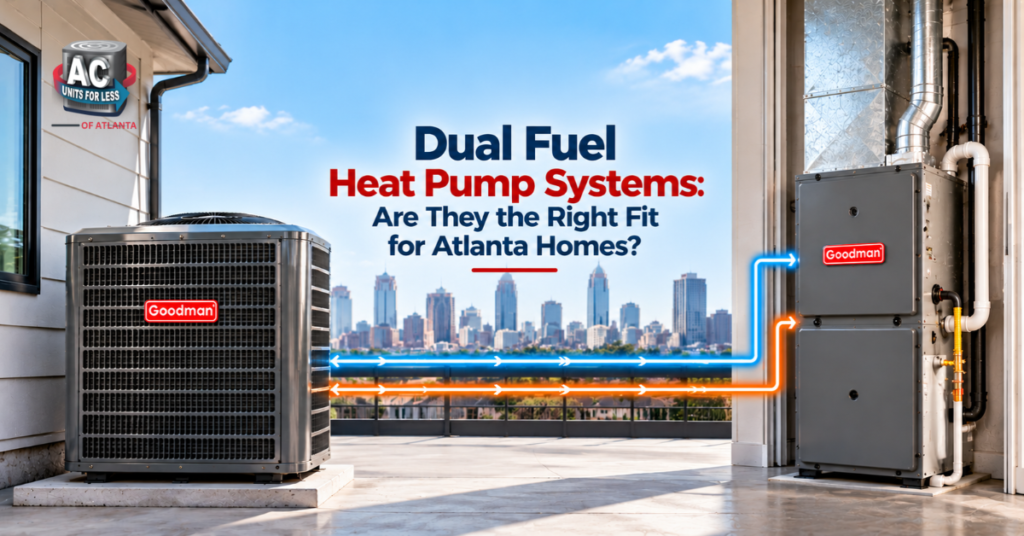
Atlanta winters are hard to predict. Most days stay mild enough for a light jacket, then a cold front rolls in and you get three nights in the 20s. That swing is why so many homeowners are asking about dual fuel heat pump systems. These setups pair an electric heat pump with a gas furnace, so your home uses whichever heat source suits the weather outside.
This guide explains how dual fuel heat pump systems work, who they suit, and what to check before you buy.
What Is a Dual Fuel Heat Pump?
If you’ve searched “what is a dual fuel heat pump,” here’s the short answer. It’s a heating and cooling setup with two main pieces: an outdoor heat pump and an indoor gas furnace. They share one thermostat and one duct system.
In summer, the heat pump cools your home like a regular central air conditioner. In mild winter weather, it runs in reverse and moves heat from the outside air into your house. When it gets too cold for the heat pump to keep up, the furnace takes over.
That’s the whole idea behind a dual fuel heating system. It’s one of several efficient options for Georgia homes, and our guide to energy efficient HVAC systems in Georgia shows how the others compare.
How the Switch Works
The thermostat decides which unit runs, based on an outdoor switchover temperature, usually somewhere in the 30s. Above that number, the heat pump heats your home. Below it, the furnace fires up and the heat pump rests. Most homeowners set it once and forget it.
Why Atlanta’s Climate Suits Dual Fuel Heat Pump Systems
A heat pump works best when winter is mild, and Atlanta winters mostly are. Daytime highs in the 50s are common from December through February, and a heat pump keeps the house comfortable on electricity alone.
The trouble shows up on cold nights. When temperatures drop near freezing, a heat pump has less heat to pull from the outside air. It runs longer, and drafty rooms start to feel chilly. That’s where the furnace earns its place, delivering steady, warm air until the cold snap passes.
Summer matters too. Long, humid stretches in the 90s mean your heat pump spends months in cooling mode, so its efficiency rating counts.
Benefits of a Dual Fuel Heating System for Atlanta Homeowners
Here’s what buyers tend to like most about dual fuel heat pump systems:
- Lower energy use on mild days, since the heat pump moves heat instead of burning fuel.
- Warmer air on cold nights, because the gas furnace takes over when the heat pump struggles.
- One thermostat controls everything, and the switch happens automatically.
- Less wear on each unit, since neither one carries the full heating load all winter.
- A second heat source, so you’re not relying on one piece of equipment through a cold week.
- Flexibility if utility rates shift, since you can adjust the switchover point.
Are Dual Fuel Heat Pump Systems Right for Your Home?
Dual fuel isn’t the best match for every house. Your fuel source, home size, and preferred brand all play a part. If brand is still an open question, our breakdown of the best HVAC brands for Atlanta homes puts the top names side by side.
It’s Usually a Good Fit If…
Your home already has a natural gas line and ductwork. That’s the biggest factor. It also makes sense if you have a working gas furnace and you’re shopping for a new outdoor unit anyway. Choosing a heat pump instead of an AC-only condenser gives you dual fuel without starting from scratch.
Rental and multifamily owners like it too, since tenants get steady heat without relying entirely on electric heat strips.
You Might Not Need It If…
Your home has no natural gas line. A small, well-sealed home or condo may also do fine with a standard heat pump and an electric heat kit, since Atlanta’s cold spells are short.
How to Choose the Best Dual Fuel Heat Pump
Dual fuel heat pump systems are only as good as how well the pieces match. Picking the best dual fuel heat pump for your home comes down to four things.
Match the Heat Pump to Your Home’s Size
Heat pump condensers are sized in tons, usually 1.5 to 5 tons for homes. Too small, and it runs nonstop in July. Too large, and it cycles on and off without pulling enough moisture from the air, leaving rooms clammy. A load calculation is the most reliable way to get the size right.
Pick a Furnace Efficiency That Fits Your Plans
Gas furnaces are rated by AFUE, which tells you how much of the fuel turns into usable heat. You’ll typically see 80%, 92%, and 96% AFUE options. Since the furnace only runs on the coldest days, many Atlanta homeowners find an 80% model works well. If you plan to lean on gas more often, a 92% or 96% furnace makes more sense. Furnaces from 40,000 to 120,000 BTU cover most houses.
Don’t Skip the Thermostat
The thermostat is the brain of the system. It needs to support dual fuel control so it can choose between the heat pump and the furnace.
Plan Where Each Unit Goes
In a dual fuel setup, the heat pump sits outside and the gas furnace sits indoors, usually in the attic, basement, or a closet. Make sure the furnace space has room for the indoor coil the heat pump needs. Our guide to the different types of air conditioning systems explains how these setups compare.
Goodman Dual Fuel Heat Pump Options
Goodman is a common pick for a dual fuel build. A Goodman dual fuel heat pump setup pairs a Goodman heat pump condenser with a Goodman gas furnace, so the indoor and outdoor equipment come from the same brand.
Goodman’s heat pump condensers use R-32 refrigerant, and its gas furnaces come in 80%, 92%, and 96% AFUE options. Sticking with one brand across several units can also keep specs consistent from property to property. To see more Goodman equipment, visit our Goodman commercial HVAC sales page.
A Quick Example From an Atlanta Home
Say you own a 2,000-square-foot house in Roswell. Your gas furnace is a few years old, but your outdoor AC unit is near the end of its life. Instead of another AC-only condenser, you choose a heat pump of the same tonnage and pair it with your current furnace (as long as the furnace and coil are heat-pump compatible) and a dual fuel thermostat.
Now most of your winter heating runs on the heat pump. On the few January nights in the 20s, the furnace takes over, and it logs far fewer hours than it would as your only heat source.
Tip: Before you buy, write down your furnace’s model number to confirm it works with a heat pump. For a wider shopping checklist, this guide to quality heating and cooling equipment is worth a read.
Final Thoughts
For many Atlanta homes, dual fuel heat pump systems hit a sweet spot. The heat pump handles the mild days that make up most of our winter, and the gas furnace covers the cold snaps. If your home already has gas and ductwork, this setup deserves a close look.
Not sure which size or furnace efficiency fits your home? Reach out to the team at AC Units For Less Atlanta. We’ll help you choose the best dual fuel heat pump match from brands like Goodman, so you buy the right equipment the first time.
FAQs
Q1. What is a dual fuel heat pump in simple terms?
It’s an electric heat pump paired with a gas furnace that share one thermostat. The heat pump heats on mild days, and the furnace takes over when it gets very cold.
Q2. At what temperature does a dual fuel system switch to gas?
Most are set to switch somewhere in the 30s. You can adjust this point on a dual fuel thermostat to lean more on gas or on electricity.
Q3. Can I add a heat pump to my existing gas furnace?
Often yes, if your furnace and indoor coil are compatible with a heat pump. You’ll also need a thermostat that supports dual fuel control.
Q4. Is a Goodman dual fuel heat pump a good choice for Atlanta homes?
Goodman pairs R-32 heat pump condensers with 80%, 92%, and 96% AFUE gas furnaces. That range makes it easy to match equipment to Atlanta’s mild winters.
Q5. Does a dual fuel heating system work during a power outage?
No. Even the gas furnace needs electricity to run its blower and controls, so both sides stop working without power.