
If you work in HVAC around metro Atlanta, you know how this goes. A heat pump quits in the middle of July, the homeowner wants a new one this week, and the supply house tells you the unit is on backorder. That gap between the call and the pickup is where jobs get lost.
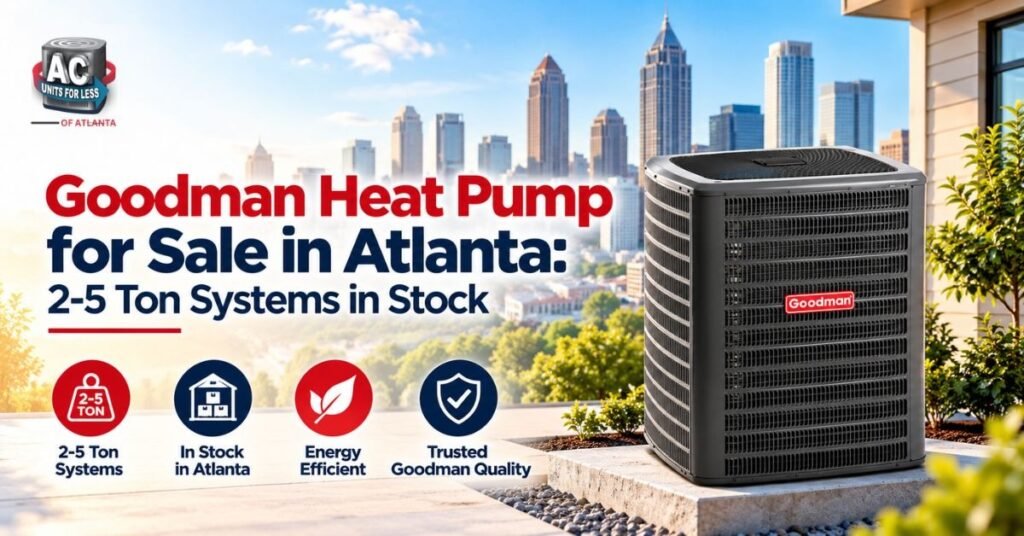
AcunitsforLess Atlanta keeps Goodman heat pump equipment from 2 through 5 tons in stock, along with the air handlers and coils that match it. Whether you need one system for a home in Roswell or outfitting a row of rentals in Gwinnett, this guide covers what to order, how to size it, and which setup fits which job.
Why Atlanta Contractors Keep Ordering Goodman
Atlanta’s weather makes a strong case for heat pumps. Summers are long, hot, and sticky. Winters are short, with a handful of nights that dip below freezing. A heat pump handles both seasons with one outdoor unit, and electric heat strips in the air handler cover those rare cold snaps.
Goodman has a few things going for it that matter on real jobs:
- Parts are easy to find around the metro area, so nobody waits weeks for a small component.
- Most technicians around Atlanta already know Goodman equipment well, so there’s no learning curve on the job.
- The units are built in Texas, at Daikin’s plant outside Houston, and Daikin owns the Goodman brand.
- The lineup covers every common size from 2 to 5 tons, in both split and package configurations, so one brand can handle most of your orders.
We’ve had a close working relationship with Goodman since we opened in 2016. If you’re bidding larger jobs, our Goodman commercial HVAC sales team can help with light commercial and multi-unit orders too.
Goodman Heat Pump Sizes We Stock: 2 to 5 Tons
Sizing is where most callbacks start. An oversized unit cools the house fast, shuts off, and leaves the air damp. An undersized one runs all afternoon and still can’t keep up. Here’s how each size usually lines up with Atlanta properties.
Goodman Heat Pump 2 Ton
A 2 ton unit fits smaller spaces. Think condos, townhomes, finished basements, bonus rooms, and the upstairs zone in a two-system house.
We see a lot of these go into older in-town bungalows in places like Decatur and East Atlanta, where the homes are compact and the ductwork is limited. A 2 ton system is also a smart pick for a garage apartment or a home addition that the main system can’t reach.
One tip: don’t bump up to 2.5 tons “just to be safe.” On a small home in Georgia humidity, that extra capacity usually makes comfort worse, not better.
Goodman 3 Ton Heat Pump
This is the size we sell most often. A Goodman 3 ton heat pump matches a lot of the mid-size, single-story homes and older two-story homes across Marietta, Smyrna, and Lawrenceville.
If the existing system on site is 3 tons, the new unit will usually fit right into the same footprint. Still, run a load calculation first. Homes that got new windows, attic insulation, or a sealed crawlspace often need less capacity than they did 15 years ago.
2.5, 3.5, and 4 Ton Options
Not every house lands on a round number. We carry the in-between sizes, so you can order what the load calculation actually calls for. A 3.5 ton unit is common for larger ranch homes, and 4 tons tends to fit bigger two-story houses in the northern suburbs. If the customer only needs cooling, our guide to the Goodman AC unit covers the straight-cool side of the lineup.
Goodman Heat Pump 5 Ton
The 5 ton model is the largest residential size. It suits big homes in Alpharetta, Johns Creek, and Cumming, plus small offices, retail spaces, and churches with open floor plans.
Before you order this size, check two things. First, make sure the ductwork can actually move the airflow a 5 ton system needs. Undersized ducts are common in homes that were built with two smaller systems in mind. Second, ask whether one large system is the right call, or if two smaller zoned systems would give the owner better comfort upstairs and down.
Split System or Package Unit: Which One Fits the Job?
Once you know the tonnage, the next decision is the configuration. Goodman offers two main setups, and each one solves a different problem.
Goodman Heat Pump System (Split)
A split Goodman heat pump system has an outdoor unit and an indoor air handler connected by a refrigerant line set. This is the standard setup for most Atlanta homes with an attic, closet, or basement for the indoor unit.
Buying a matched system, with the outdoor unit and air handler designed to work together, gives you the performance it was designed for. Mixing a new outdoor unit with an old indoor coil is one of the fastest ways to end up with uneven temperatures and a system that never quite keeps up.
If your customer is still deciding between cooling only and year-round heating, our breakdown of heat pump vs air conditioner can help them see the trade-offs.
Goodman Heat Pump Package Unit
A Goodman heat pump package unit puts everything in one cabinet outside. The compressor, coils, and blower all sit together on a slab or a rooftop, and the ducts connect directly to the box.
Package units make sense when there’s no good place for an indoor air handler. We sell a lot of them for:
- Crawlspace homes with no attic access or interior closet space.
- Manufactured and mobile homes.
- Small commercial buildings, such as offices and storefronts, that need rooftop equipment.
A package unit also frees up interior square footage, which landlords and small business owners tend to appreciate. The trade-off is that the whole system sits outdoors, so a solid pad, proper clearance, and good drainage matter more than usual.
What to Check Before You Order
A little prep before the order goes in saves a second trip to the job. Here’s what we ask contractors to confirm:
- Size the system from a Manual J load calculation, not from the label on the old unit.
- Check the refrigerant. Newer Goodman models run on R-32, so plan for a matching indoor coil or air handler instead of reusing an old R-410A coil.
- Look at the line set. Confirm the size and condition before you order, so you know whether a new one belongs on the order too.
- Verify the electrical. Compare the breaker and wire size against the new unit’s nameplate.
- Pick the right heat strip size for the air handler so the house stays warm on the coldest nights.
If you’re still comparing brands for a bid, this roundup of Quality Heating and Cooling Equipment Options walks through what to look for beyond the spec sheet.
A Real-World Example: Ordering for a Marietta Home
Here’s a typical call. A contractor gets a no-cool complaint at a 1990s brick ranch in Marietta. The existing system is an old 3.5 ton heat pump running R-22, and the compressor is done.
The tempting move is to order another 3.5 ton unit and be finished. But the homeowners put in new windows and added attic insulation a few years back. The load calculation comes back right around 3 tons.
So the contractor orders a Goodman 3 ton heat pump with a matched air handler, checks the line set, and picks up the equipment the next morning. The house dehumidifies better, the unit runs longer, steadier cycles, and the homeowner gets a system that’s actually sized for the house they live in now.
That’s the kind of job where having stock nearby makes the difference. No waiting on freight, no rescheduling the customer, and no explaining to a family with a hot house why the job got pushed to next week.
Pairing Your Heat Pump With the Right Indoor Unit
The outdoor unit gets most of the attention, but the indoor side decides how quiet and comfortable the system feels. A variable-speed blower will run quieter and pull more moisture out of the air than a basic single-speed model, which is worth a lot in Atlanta summers.
If you want a refresher on how the indoor side works, our article on the air handler explains the parts, the airflow, and why matching matters.
Why Buy From AcunitsforLess Atlanta
We’re a local supplier based in Roswell, and we work mostly with small contractors and property owners who don’t always get the attention they need from the big distribution houses.
Here’s what you get when you order through us. You get Goodman equipment that’s in stock and ready for pickup. You get honest advice on sizing and matching. And if you’re managing multiple properties or running several crews, you can bundle units together. Our guide on bulk HVAC orders explains how contractors plan their purchases around the busy season.
Get the Right Goodman Heat Pump on Your Next Job
A Goodman heat pump is a dependable fit for Atlanta’s climate, and it’s one of the easiest brands to source parts for around the metro area. The real work is in the details: the right tonnage, the right configuration, and a properly matched indoor unit.
Whether you need a single Goodman heat pump 2 ton unit for a condo or a Goodman heat pump 5 ton system for a small office, we can help you sort out the order and get it moving. Call or email the AcunitsforLess Atlanta team, tell us about the job, and we’ll have the right equipment ready for you.
Frequently Asked Questions
Q1. Is Goodman a good heat pump brand for Atlanta homes?
Yes. Goodman units handle Atlanta’s hot, humid summers well, and backup heat strips cover the few freezing nights each winter. Parts are easy to find locally, and most technicians already know the equipment.
Q2. What size Goodman heat pump do I need?
The right size comes from a Manual J load calculation, which looks at the home’s insulation, windows, ductwork, and layout. Most mid-size Atlanta homes land around 3 tons, but always confirm with a load calculation instead of copying the old unit’s size.
Q3. What is the difference between a split system and a package unit?
A split system has an outdoor unit and an indoor air handler. A package unit puts everything in one outdoor cabinet. Package units work best for crawlspace homes, mobile homes, and buildings with rooftop equipment.
Q4. Can homeowners buy a Goodman heat pump, or only contractors?
We sell to contractors, property managers, and homeowners. If you’re a homeowner, have a licensed HVAC contractor handle the setup so the system runs the way Goodman designed it to.Q5. Does a heat pump work during Georgia winters?
Yes. Atlanta winters are mild enough for a heat pump to handle most of the season on its own. On the coldest nights, the electric heat strips in the air handler kick in to keep the home comfortable.