To choose an appropriate system for cooling your home, it is important to first learn about the Types of Air Conditioning Systems available to you. Homes have different cooling needs based on the size of the home, the home’s insulation, and the home’s layout. This is especially important to consider in very hot and humid climates. At AC Units for Less Atlanta, customers can review available HVAC equipment options and compare system capacities designed to meet Georgia residential cooling requirements.
Choosing the right system is key to your comfort, the operating cost, and the long-term function of the system. Some homes need full-home systems, but some do better with zoned or compact alternatives. Knowing and understanding the options available helps compare their efficiency, installation needs, and energy consumption.
Why Understanding Types of Air Conditioning Matters
Cooling a home differently in various areas is inefficient and can, in fact, cost more to operate. Each cooling system is different to fit the needs of the environment it is going to be used in and have unique usage patterns.
Factors That Affect System Selection
Cooling expectations, size of the property, existing ductwork, and anticipated long-term electricity usage all need to be considered. These will all help guide in determining which air conditioning systems are available to you.
Quick Considerations Before Buying
The system chosen should have enough open space for installation and should provide the proper air circulation coverage. Poor planning can reduce the effectiveness of your ac types.
The 4 Types of Air Conditioning System Explained
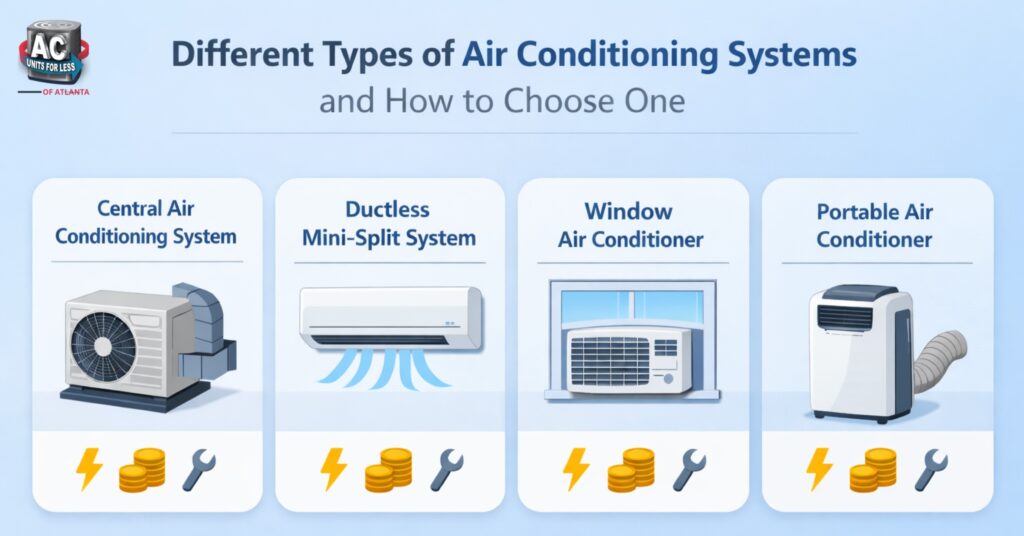
The 4 types of air conditioning system used in homes and light commercial buildings are described here.
Central Air Conditioning Systems
Central systems cool an entire home by using ductwork to distribute air. For consistency in temperature across the home, these different types of air conditioners systems are usually used to prioritize whole home airflow.
Ductless Mini Split Systems
Ductless mini split systems offer ductless zoned cooling alternatives. These types of ac units are commonly used by homeowners for extensions, office spaces, or upstairs areas where airflow is usually restricted.
Window and Portable Units
When cooling is required only in single rooms or for a limited period, these compact systems are selected. Out of the various types of air conditioner units, these are most commonly selected for apartments or single-room cooling rather than whole-home comfort cooling.
Packaged HVAC Systems
These types of air conditioning units are combined with one outdoor cabinet. When there is limited indoor space or the need for rooftop units, these different types of air conditioners systems are usually utilized.
Comparing Different Types of Air Conditioners
The efficacy of each unit type varies depending on home structure and use.
Cooling Coverage and Performance
For large homes, central cooling systems are usually needed while smaller air conditioning systems are used to balance the cooling in different zones.
Installation Requirements
Some types of a/c units can function on their own without needing ductwork while others require additional construction. This directly impacts installation complexity.
Energy Efficiency and Operating Cost
Various air conditioning types use energy differently. There is more energy use variability between single room systems and whole-home systems than there is between whole-home air conditioning systems.
Based on demand for cooling, the best use case for air conditioning is either entire homes or small rooms.
Understanding AC Refrigerant Types
Modern cooling equipment are refrigerant types that have been updated for improved efficiency and environmental standards.
Common Refrigerants Used Today
Modern systems use either R-32 or R-410A. These ac refrigerant types have improved cooling and energy efficiency compared to their predecessors.
Why Refrigerant Choice Matters
Updated ac refrigerant types will have an effect on future compatibility, cost of operation, and environmental impact.
How to Choose the Right System for Your Home
After reading about the Air Conditioning Types, the homeowners should have a good idea of the best options to focus on. You can learn more about modern HVAC solutions by exploring Heating and Cooling Systems for Homes and Businesses to understand how different systems are designed for residential and commercial comfort needs.
Choosing Based on Home Size
Properties that are larger are able to utilize central cooling more effectively, whereas smaller sized zones can work with more flexible types of AC units.
Choosing Based on Budget
There is an important balance for Air Conditioning Types between the initial investment and the long-term cost of power usage.
Choosing Based on Efficiency Preference
Types of AC systems that are of a higher efficiency will tend to have a higher cost of operation that will be offset over time.
Final Thoughts on Types of Air Conditioning
Knowing the Different Types of Air Conditioning Systems gives homeowners the information needed to find the right system that blends comfort, efficiency, and practicality. Central cooling and zoned solutions, each handles a unique function. Different ac types should be compared to ensure reliable performance and indoor comfort through seasonal changes. For system selection guidance, Contact Us to review suitable options.
