
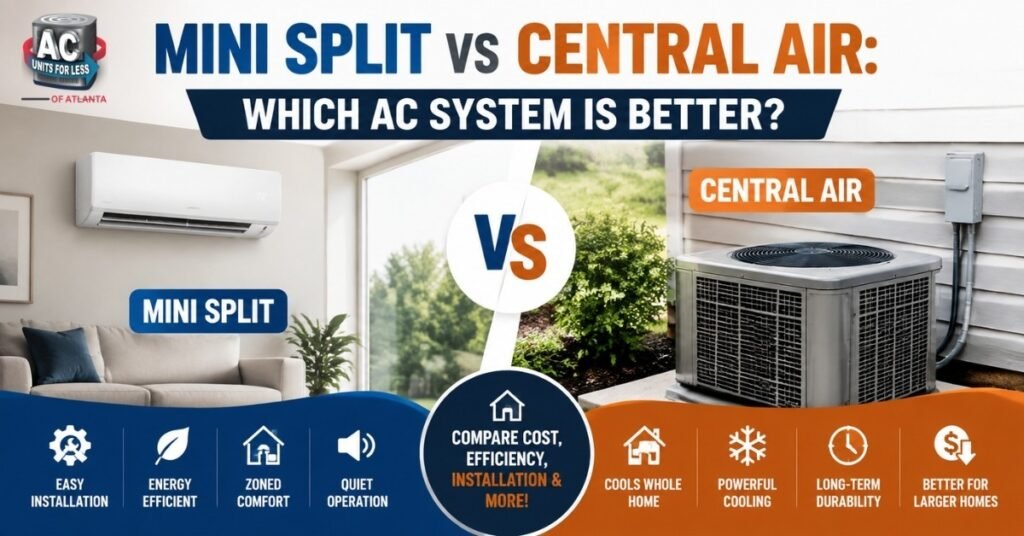
Mini split vs central air comes down to one core tradeoff: zone by zone flexibility without ductwork versus whole-house cooling through a single system. Homeowners and contractors across Atlanta ask this question every cooling season, and the right answer depends on your home’s layout, existing ductwork, and how many rooms you actually need to cool. This guide breaks down both systems so you can order the right equipment the first time, whether you’re comparing mini split vs central air conditioning for a single addition or planning a full replacement.
What Is a Mini Split System?
A mini split is a ductless cooling system built around one outdoor compressor connected to one or more indoor air handlers mounted on a wall or ceiling. There’s no ductwork anywhere in the setup. For homeowners weighing a ductless mini split vs central air decision, the appeal is simple: each indoor unit cools its own zone independently, so a bedroom can run cold while a hallway stays off entirely. Goodman, Daikin, and MrCool all make ductless models, and MrCool’s DIY line ships with pre-charged tubing that skips the vacuum pump step most other brands require.
What Is Central Air Conditioning?
Central air relies on one outdoor condenser tied to an indoor air handler or furnace, pushing cooled air through ductwork to every room from a single thermostat. It’s the standard setup in newer construction because ductwork gets built in during framing. That’s especially worth weighing when comparing mini split vs central air conditioning setups for homes without existing ducts. Leaky or undersized ductwork can waste 20 to 30 per cent of a system’s output before air reaches a single vent, which is why sizing matters as much as the equipment itself. If you’re sourcing equipment locally, our HVAC Supply Atlanta page lists current wholesale inventory for both system types.
Mini Split vs Central Air: Key Differences at a Glance
Line up central air vs mini split side by side and the differences show up fast, mostly around ductwork, zoning, and upfront cost per room.
| Factor | Mini Split | Central Air |
| Ductwork required | No | Yes |
| Zoning control | Room by room | Whole house, single thermostat |
| Upfront cost | Lower per zone | Higher single system cost |
| Best fit | Additions, older homes, rentals | New construction, whole house cooling |
| Typical SEER2 range | 18-25+ | 13.4-18 |
Mini Split vs Central Air Efficiency: Which Saves More?
Mini split vs central air efficiency almost always favours the ductless option, and the reason comes down to distance. Air in a mini-split travels a few feet from the unit directly into the room. Air in a central system travels through metal or flex ductwork that often sits in a hot attic, losing cooling capacity the whole way there. That gap is part of why mini split SEER2 ratings routinely climb above comparable central air equipment, even when both units carry the same brand name.
Multi Zone Mini Split vs Central Air: Which Handles Multiple Rooms Better?
A multi zone mini split vs central air comparison depends entirely on how independently you need each room controlled. A single central air system can only run one temperature setting for the whole house at a time. A multi-zone mini-split setup, by contrast, lets you run four or five indoor heads off one outdoor compressor, each with its own thermostat. That flexibility is exactly why multifamily property owners lean toward mini splits for buildings with separate tenants and separate comfort preferences.
Is a Mini Split Better Than Central Air?
Is a mini split better than central air depends heavily on your existing ductwork. For additions, garages, and older homes without duct chases, a mini split is almost always the better call, since running new ductwork is invasive and expensive. For new construction or homes with sealed, correctly sized ducts already in place, central air usually wins because one system covers everything from a single thermostat. When people ask about mini-split vs central air performance in humid Atlanta summers specifically, ductless systems typically pull ahead on comfort and recovery speed. See our earlier comparison of PTAC vs Mini Split systems for another angle on ductless options.
Cost and Installation Considerations
A mini split ac vs central air cost comparison always needs to separate equipment price from labour, since installation pricing varies by contractor and by property.
- Mini split heads cost less individually but add up fast across multiple zones.
- Mini split vs central air efficiency gains can offset a higher mini split sticker price over several years
- Wholesale equipment pricing narrows the cost gap between both systems significantly.
- Labour should always be quoted separately by a licensed HVAC installer.
We supply genuine equipment at wholesale prices. You choose your own licensed installer once the equipment is ordered.
Which System Should You Choose?
Mini split vs central air decisions usually come down to a short checklist rather than a long debate.
- Choose a mini split if you’re cooling one to three rooms with no existing ductwork.
- Choose central air if you’re building new or your ducts are already sealed and sized correctly.
- Choose a multi zone mini split vs central air combo if a rental property has separate tenants.
- Choose both systems together if most of the house has ducts but one addition never got connected.
- Choose wholesale equipment either way to keep total project cost under control.
Frequently Asked Questions
Q1: Is a mini split better than central air for small additions?
Yes. A single mini split head is almost always cheaper and less invasive than extending ductwork to one new room.
Q2: What’s the real difference in mini split vs central air conditioning cost?
Mini splits cost less per zone upfront. Central air costs less overall when ductwork already exists and covers the whole house.
Q3: Does a multi zone mini split vs central air setup work for rentals?
Yes. Multi zone mini splits let each unit or tenant control their own temperature without touching shared ductwork.
Ready to Buy?
Whether you land on mini split vs central air, both systems are available at wholesale pricing through AC Units for Less Atlanta, with genuine Goodman, Daikin, Trane, and MrCool equipment in stock for contractors and property owners. For a deeper walkthrough of matching equipment to your specific property, read our full guide on choosing the Right HVAC System.
Conclusion
Mini split vs central air isn’t really a question with one universal answer. Ductwork, zoning needs, and budget decide it property by property. Get the equipment sized and specified correctly, then let a licensed installer handle the labor.