If you’re trying to cool or heat several rooms without the cost and mess of new ductwork, a multi zone mini split is probably the best option on the market right now. This guide walks through how these systems work, which brands are worth considering, how to size one correctly, and where to buy wholesale across Alpharetta, Conyers, Riverdale, and the rest of metro Atlanta. Whether you’re a homeowner replacing an outdated window unit setup or a contractor sourcing equipment for a multi-room renovation, understanding your options upfront can save real money on both the equipment and the installation.
What Is a Multi Zone Mini Split?
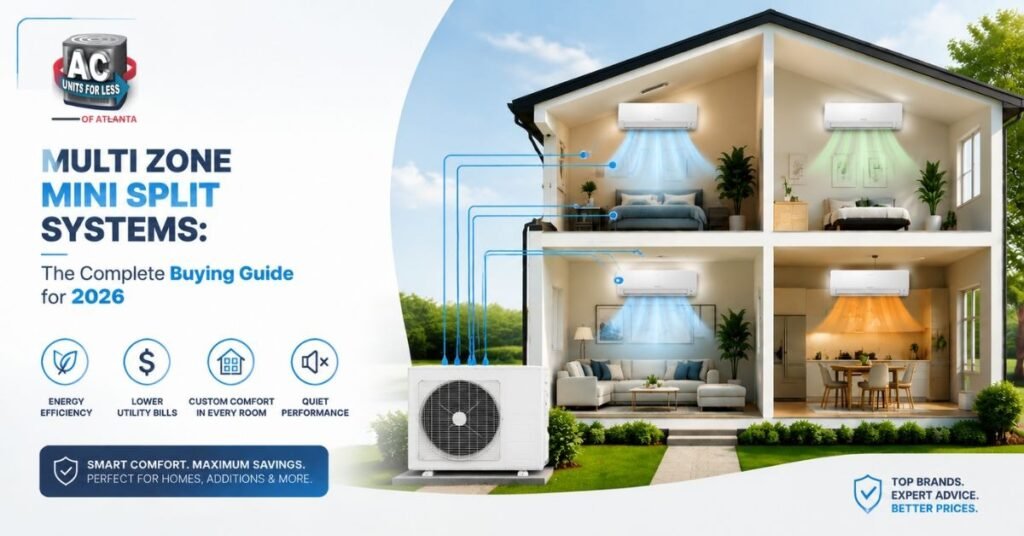
This setup connects one outdoor condenser to multiple indoor air-handling units — anywhere from 2 to 8 zones, depending on the brand and model. Each indoor unit operates independently, so you can cool a bedroom to 68°F while keeping the home office at 72°F, all from a single outdoor unit and without a single foot of ductwork. The same zoning principle scales up for larger properties too — property managers and builders often pair this approach with a commercial HVAC system for multi-unit or light commercial buildings.
This is sometimes described the other way around — a mini split multi zone configuration — but the idea is the same: one outdoor condenser doing the work for the whole house, saving outdoor space and often reducing total equipment cost compared to several separate single-zone systems.
How It Works
Each indoor head connects to the shared outdoor condenser through its own small refrigerant line, routed through a compact 3-inch wall opening. The outdoor unit’s inverter compressor automatically adjusts output to match the combined demand of all active zones, which is why a well-sized system tends to run more efficiently than several separate single-zone units working independently. Because each indoor head has its own sensor and remote, the compressor only ramps up output for the rooms actually calling for cooling or heating at any given moment, rather than running at full capacity across the whole home.
Key Benefits
- No ductwork required — ideal for older homes, additions, and garage conversions
- Independent zone control — every room gets its own thermostat and remote
- Higher efficiency — most modern systems reach 20+ SEER2, with no duct energy loss
- Quieter operation — inverter-driven compressors run at lower, steadier speeds
- Flexible installation — wall-mounted, ceiling cassette, or slim duct indoor units to match any room layout
- Scales to commercial spaces too — property managers and builders working on multi-unit or light commercial projects can pair this same zoning approach with a commercial HVAC system for larger buildings
Top Brands to Consider
Not all systems are built the same. Here’s how the major brands compare:
Daikin Multi Zone Mini Split
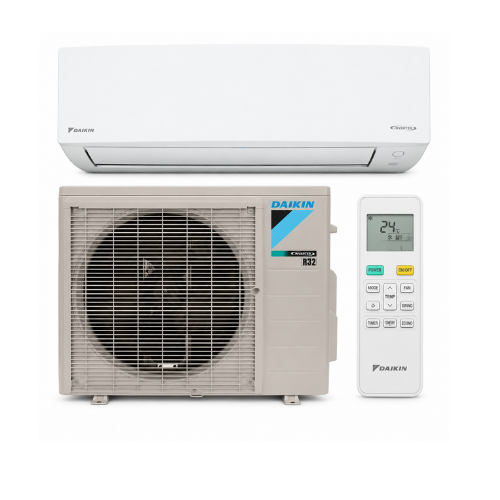
Known for cutting-edge inverter technology and strong energy efficiency ratings, the Daikin multi zone mini split lineup is a popular pick for homeowners who want long-term reliability from an established manufacturer. As with any Daikin system, always buy from an authorised dealer to protect your warranty coverage, and keep up with routine filter cleaning and refrigerant leak checks to get the longest life out of the unit.
Mitsubishi Multi Zone Mini Split
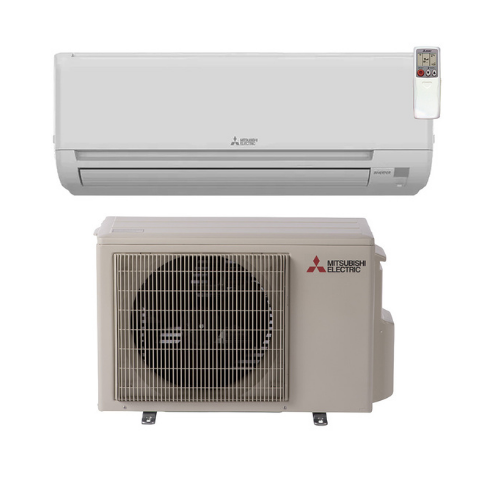
Widely regarded for quiet operation and precise zone control, the Mitsubishi multi zone mini split lineup includes several models that support mixed indoor unit types on the same outdoor condenser.
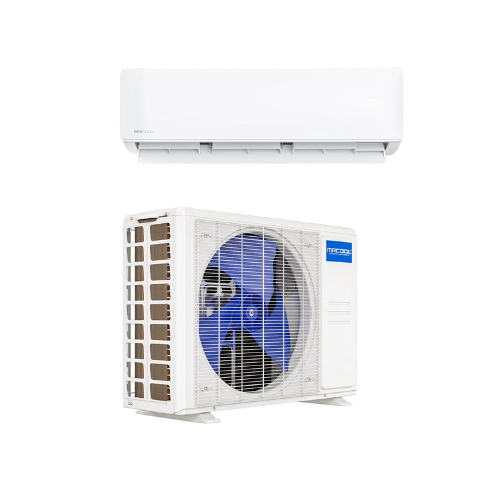
Mr. Cool Multi Zone Mini Split
The Mr Cool multi zone mini split range stands out for DIY-friendly pre-charged line sets, which appeal to homeowners and contractors looking to cut installation costs without sacrificing performance.
Cooper & Hunter, OLMO & Bravo
The Mr Cool multi zone mini split range stands out for DIY-friendly pre-charged line sets, which appeal to homeowners and contractors looking to cut installation costs without sacrificing performance.
Sizing Your System Correctly
Correct sizing is the single biggest factor in how well a multi zone mini split system performs. As a general rule:
- Calculate the BTU requirement for each individual room (roughly 20 BTU per square foot as a starting point, adjusted for ceiling height, insulation, and sun exposure).
- Add up the BTU requirements for all zones you want to connect.
- Match that total to an outdoor condenser sized to handle the combined load — most manufacturers publish compatible zone/BTU combinations for each condenser model.
An HVAC professional can run a full Manual J load calculation for precise sizing, especially for larger or mixed-use spaces. Timing your purchase also matters for your budget — see our breakdown of the best time to buy an HVAC system before you lock in your order.
Multi Zone vs. Single Zone: Which Should You Choose?
A single-zone mini split makes sense if you’re only conditioning one room — a garage, addition, or home office. If you’re weighing a mini split multi zone setup against several standalone units, the math usually favours one shared condenser. Once you need to cover three or more rooms independently, a multi zone mini split system almost always becomes the more cost-effective and space-efficient choice, since you avoid installing multiple separate outdoor condensers.
Where to Buy in Atlanta
At AC Units for Less Atlanta, we supply this equipment at wholesale pricing to contractors, property managers, and homeowners throughout the metro area. We proudly serve:
- HVAC Equipment Sales in Alpharetta
- HVAC Equipment Sales in Auburn
- HVAC Equipment Sales in Conyers
- HVAC Equipment Sales in Flowery Branch
For more guidance on evaluating heating and cooling equipment options before you buy, read: Find Quality Heating and Cooling Equipment Options.
Keeping Your System Running Efficiently
Routine upkeep matters more with multi-zone setups since you’re maintaining several indoor heads off one condenser. Clean or replace air filters every 2-4 weeks to keep airflow strong across every zone, and check the outdoor unit periodically for debris that could restrict airflow to the compressor. An annual professional inspection — checking refrigerant levels, coil cleanliness, and electrical connections — goes a long way towards avoiding mid-summer breakdowns and keeping your warranty coverage intact.
FAQs
Q1. How many zones can a multi zone mini split support?
Most residential systems support 2 to 6 zones per outdoor condenser; some commercial-grade models support up to 8.
Q2. Is this more expensive than a single zone system?
The condenser costs more upfront, but a multi zone mini split system is usually cheaper than several separate single-zone systems, since you only need one outdoor unit and one hookup.
Q3. Which brand makes the best system?
Daikin and Mitsubishi are known for reliability and quiet operation. Mr Cool multi zone mini split kits are popular for DIY-friendly installation at a lower cost.
Q4. Can I mix indoor unit types on one system?
Yes — wall-mounted, ceiling cassette, and slim duct units can share the same outdoor condenser, as long as total BTU stays within its rated capacity.
Q5. Do these systems work well in Georgia’s climate?
Yes. Modern ductless equipment handles Georgia’s humid summers and mild winters well, especially heat pump models.
Final Thoughts
A multi zone mini split is one of the most flexible ways to heat and cool a home without ductwork — giving you room-by-room control, strong energy efficiency, and installation flexibility that traditional central air simply can’t match. Whether you’re outfitting a whole home or just a few key rooms, choosing the right brand and correct sizing makes all the difference, and getting equipment at wholesale pricing rather than retail markup can make the upgrade far more affordable than most homeowners expect.
Ready to compare options? Browse our full HVAC inventory or contact AC Units for Less Atlanta today for a fast, no-hassle quote on Daikin, Mitsubishi, Mr. Cool, and more.
📞 (470) 857-4555 📧 sales@acunitsforless.com
📍 1005 Mansell Rd, Roswell, GA 30076
🕐 Mon–Fri: 7am – 7pm